Inside the Lam Looking Building
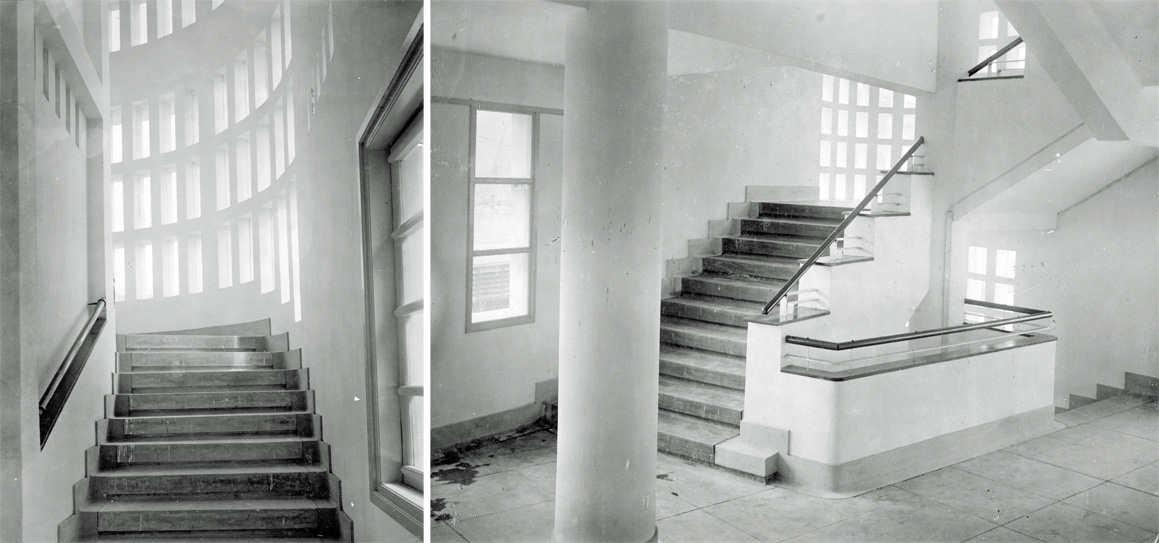
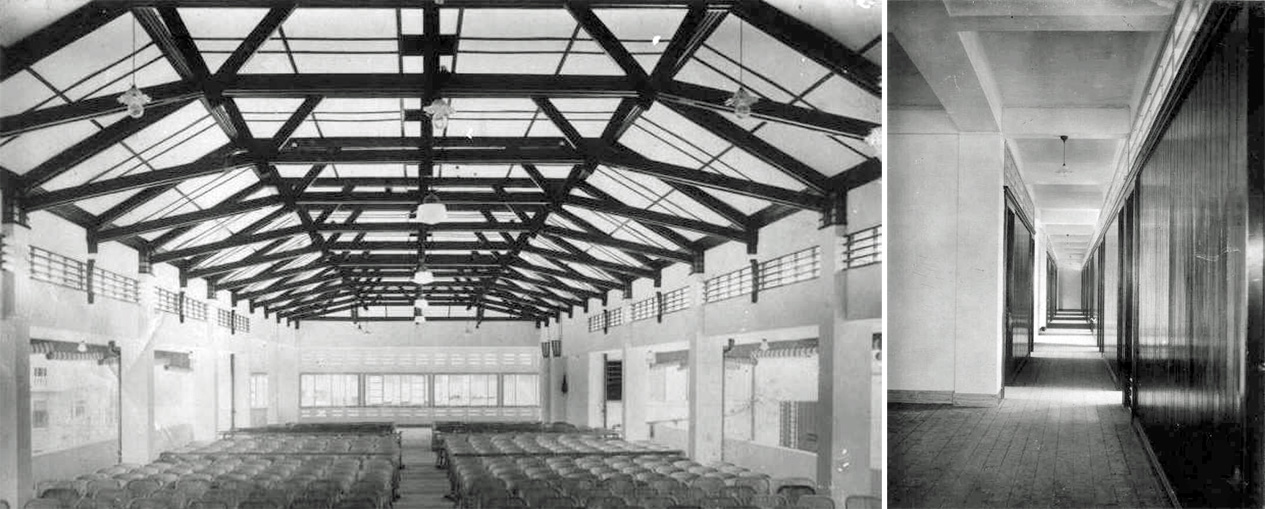
Thanks to Ruth Rollitt, we now have some interior pictures of the Lam Looking Bazaar.
For those of you who were curious to know what the interior looked like, feast you eyes on these!
the staircase inside the building
left to right: the top floor, which became a cinema hall; the corridor on the upper floor


I hunger for more, if there are more.
I, too, support Aaron’s suggestion to name a street after BM Iversen. He has not been given enough recognition for the shape of Ipoh town.
I find the support for B M Iversen, from members of this blog, very interesting. However I regret there is another side of the story when it comes to Public Opinion on the value of his work. Some of these being expressed in words I would not have believed any educated Malaysian would have found it necessary to use.
A few weeks ago the Ipoh Echo ran a story about his daughter Ruth and the book she is writing about his life. (http://ipohecho.com.my/v2/2012/03/16/an-afternoon-with-ruth-iversen-rollitt/). If you go to the link you will see somewhat different views from local readers, one of whom calls himself a patriot and wrote the following to Ruth, who as I am sure you will understand was very upset by this and the other poisonous words:
“Your father is a true racist and there is no doubt about it at all.He made a blunder in designing buildings in Ipoh which even a school drop out could easily say that those buildings has all the Western characteristics in their designs and none of the local.
I conclude here that Iversen was a worst selection of architect that Ipoh’s state government made at that time. Sometimes the truth is bitter!”
Do read the Echo article and comments and should you feel it appropriate perhaps you could comment too.
I did not see the comment but if I had I would have replied with the following, tongue-in-cheek.
“Your father is a true traitor and there is no doubt about it at all. He made a blunder in not proposed better building designs compared to Iversen’s in Ipoh which even a school drop out could easily say that those buildings has all the Western characteristics in their designs and none of the local.
I conclude here that your father was the worst citizen Ipoh’s state government ever had at that time. Sometimes the truth is bitter!”
Sarcasm fully intended in case it did not cross his feeble mind.
Some numb skulls don’t understand why we have Western characteristics designs in some of the old town buildings. They have read distorted history books. The then the British Government which ruled Malaya,engaged in a radical replanning of the ramshackle town. They were responsible to organize and plan for a proper city layout, as such today, we are able to see as well as many of its notable architectural icons, including the Ipoh Railways Station, Town Hall, Birch Memorial, High Court, St.Michael Institutions and other notable buildings.
I used to visit an Aunt who stayed in one of the apartments there. The pictures above must have been taken when it was new and unoccupied. As I remember it in the sixties, every corridor and stairs had goods lined on both sides. Hardly room for two people to walk side by side.The stalls on the ground floor facing Jalan Laxamana (Riverside) were mostly selling bags and these were stacked from the floor up and hung from the ceiling down. On the opposite side of the road were side stalls selling crockery. Once, when walking there, I strayed and walked straight onto a stack of drinking glasses, breaking a few. My Mum had to pay for the damages!!
The cinema showed mostly Cantonese films and I assume chinese operas, because my cousin who was staying there was always playacting such scenes.
I lived in one of the shophouses behind the building, facing the then Hugh Low Street with families of 2 of the brothers of my father, total in all 14 children! We used to play in the building itself, running up and down the staircase, which ran in circular formation hugging the inner walls; those were really good & carefree times for children.
Welcome to the blog, SGLeong
Just curious: which shop did your family own in those good ‘ol days?
That comment about Western characteristics and local is very common when referring to modern architecture of that period. Truth is, it probably can be as local as a vernacular building, I understand B M Iversen has included many passive elements in the building to improve one’s comfort in the building (Almost all buildings did!) Unfortunately today, with air conditioning and poor appreciation of functional aesthetics, all these things have diminished from the architect’s practice.
This is not a comment but true facts and experience while living at Lam Looking Bazaar.WE just had reunion diner on the 15th of our chinese new year[2013] which was held at tat lok street just next to Lam Looking Bazaar.This gathering is for people staying in Lam Looking at a time when we were just between the age of 12 to 14 years old.Those are the times when all children would in the courtyard behind the coffee shop,the shoe shop,the electrical shop and the textile shop.Surrounding the courtyard there are the perm parlor.Next is the tailor and after the tailor is the lady barber shop.The image of people and other shops is still in my mind and so many things to describe.I am sorry I have to end here. YOURS SINCERLY, —HO ENG KAM