ipohWorld on Facebook

Chatterbox


Events

September 2010
M T W T F S S
« Aug    
 12345
6789101112
13141516171819
20212223242526
27282930  

Would you like to be an original author of this blog?

We are looking for a limited number of authors who would like to contribute articles on this site, about heritage topics in Perak. If you would like to be one of our authors, please email us at info@ipohworld.org and we can register you as an author. However, should we find unsuitable content being proposed, the author and content will be deleted without notice. We look forward to hearing from you.

On a slow boat to Malaya but not for its tin! 飘到他乡去找新生活

China, in the late 19th and early 20th century, was stifled with social upheavals. The Qing Dynasty 清朝时代 was on the verge of collapse. Many rebellions were mounted but were ruthlessly suppressed and brutally put down. It was very dangerous to live in that country during such a turbulent period.

Guangdong广东, a southern province, was a hotbed of anarchy. The people living there used to say “Mountains were high and the emperor was far away山高皇帝远.” Therefore, many young men in that province do not hesitate to rise up and revolt. They just wanted a more peaceful life for themselves and their families.

Against such a volatile backdrop, my paternal grandpa, Yip Kwee Kee叶巨基, was born, circa 1890 in Nam Hoi 南海district in Guangdong. Although diminutive in size, a man of few words and illiterate, like many of his contemporaries, he was drawn to the idea of a Republic.

He was a very skillful bean curd maker and very proud of his trade. Business was good and every cent he earned was donated to this cause. He was a very generous man.

The government arrested many of its opponents and their sponsors. They were executed publicly as a deterrent to others.

He learnt, to his horror, that his name was blacklisted by the government. So, to save his head from being chopped off, literally speaking, he decided to run away to Malaya 马来亚or Nanyang南洋 as it was called then. He also changed his name to Yip Soo 叶苏to avoid being hunted down as he knew the government was hot on his heels.

But something unexpected happened. The village headmaster, who was also a staunch supporter of the same cause and a well to do man, came with his only child, a young girl called Yim Mun严曼, to see him as he was packing to leave.

“I’m too old to run away but please take my daughter with you to Nanyang. You can have her as a wife since I knew you are a hard working man” he told Yip Soo.

Of course Yip Soo felt humbled by this sudden offer and could not turn down the respectable headmaster and the young girl standing in front of him. He gladly accepted this “gift” and promised to take her along to the new land. That was how an illiterate bean curd maker suddenly got himself a wife. A wife that was dropped from the sky, my Dad joked to me.

After a tearful farewell, they boarded a steamer and set sail to a far away foreign land, determined to start life anew.

Grandpa has heard about the tin mines in Perak. Back in his village, many young and able bodied men went to various places such as Gopeng, Kampar, Batu Gajah or Tanjung Tualang to work in the tin mines as coolies. Most of them went to escape poverty but later got themselves even poorer and indebted to some “middle men” or “agents” who had arranged for them to go there. Many spend years to redeem their freedom. This wave of illegal human trafficking was called “Mai Chu Chai卖猪仔 (人口贩卖).”

No, Yip Soo did not intend to work as a mine coolie. He only wanted to sell his bean curds to them. He knew there was a ready market for his products. So, together with his new bride and a few of his brothers who also followed along, they settled down in Gopeng on arrival, circa 1915. They rented a little wooden hut and started making bean curds to sell for a living.

Grandpa and his brothers quickly cut their long braids and threw them away. You could not be able to do that in China. A long braid is a symbol of subordination to the Qing Dynasty and any man found not having one will have his head chopped off at once!

Later, his brothers branched out and started their own families. Not long after this, grandma gave birth to my dad and his two sisters. They made Gopeng their home.

His business grew and he began to prosper. Having a little extra cash in hand, he began to indulge in gambling, his favorite pastime. He could always spend long hours gambling while his wife and children were left at home waiting for his return.

Grandpa always brings home meats and vegetables from the market after he had finished selling the bean curds there. On the way home, he would often dropped by the gambling dens and once he was engrossed with his games, he would totally forgot about the food which became stale at the end of the day when he finally goes home. Many quarrels broke out between him and grandma because of his callousness.

Once, he was caught in an illegal gambling den and together with the rest of the gamblers was taken to the police station. There, they were made to parade around the town with hands cuffed and placards hanging from their necks with the word “Illegal Gambler非法赌徒”. They were booed and jeered at by the locals. To shame you publicly was the way the British authorities punished illegal gamblers.

Grandpa soon earned the nickname “Tofu Soo 豆腐苏” among the miners who were mainly Hakkas 客家人. They simply loved his smooth bean curds which were cheap, nutritious and delicious. He soon became a popular figure in the market and the gambling dens!

Many years later, he decided to have another wife to help out in his growing business. You will need as many pair of hands as possible in this trade. It was almost impossible to do things alone. What with the grinding, cooking and also chopping fire woods!

Unlike her husband who could neither read nor write, not even his own name, grandma was an educated woman. She grew up reading classical literatures and doing embroideries. As a “siew cheh 小姐” or “rich missy”, she was used to being waited upon by maids in her childhood home.

As a “siew cheh” worth her salt, she hardly touches any house work, let alone roll up her sleeves and helps in chopping fire woods! That would be a tall order. Anyway, Grandpa did not expect her to do anything other than sitting down and minding the children. All hard work was beyond her. To him, she was just a “gift” from a rich man.

You can’t really fault her. You see, she has a pair of bound feet. Even though her feet was “released” after just a few years and they eventually grew back, but they were already deformed and she has difficulties walking. It took her many years to learn to walk properly again and it was excruciatingly painful for her to do so.

In those days, you do not have Indonesian maids or helpers. Driven by sheer necessity, she sat down and wrote a letter to her relatives in Guangdong asking them to look out for another wife for grandpa. The candidate must be someone hardworking, willing to slog without a whimper and preferably from a poor family. In a short time, one was found and put on the boat bound for Malaya.

Her name was Ng Mooi吴妹. She was accompanied on the long journey by her male relative. But it turned out to be a nightmare for her. She was sexually violated by him on the boat the entire journey. Once she reached Gopeng, he quickly took the return trip on the same boat back to Guangdong.

When Grandpa found out, he was very furious indeed. There was nothing he could do but to accept her. However, he was unsympathetic to her ordeal and instead gave her the cold treatment. Before long, she began to fall into a deep depression and shut herself in a room all day.

One day, Grandpa was out at the market and Grandma was asleep with the children. Poor Ng Mooi put together a heap of dried coconut shells which were use for cooking and started a fire. Soon the whole house was burnt down. Luckily nobody was killed.

When Grandpa got home and saw the flatten house, he blew his top. It was a rented house, not his own. In a fit of anger, he took her to Tanjung Rambutan and had her committed into the mental hospital. At that time it was ran by the British administration.

Fault was, Grandpa did not visit her at all. A few years later, the hospital sent Grandpa a letter written in English, but Grandma could not read it. So the letter was just put aside and Ng Mooi was forgotten.

By then, Grandpa insisted for another wife and this time he personally went to Guangdong to fetch her here. It was around this time that the family moved from Gopeng to Batu Gajah. There, Grandpa bought a plot of land to build his own house, ready to welcome the new bride, Chan Kwan陈裙, who later bore him another seven children.

At last, with ten children and a hardworking third wife, Grandpa Yip Soo finally got all the help he needed in his bean curd business!

And Grandma Yim Mun can sit down comfortably again!


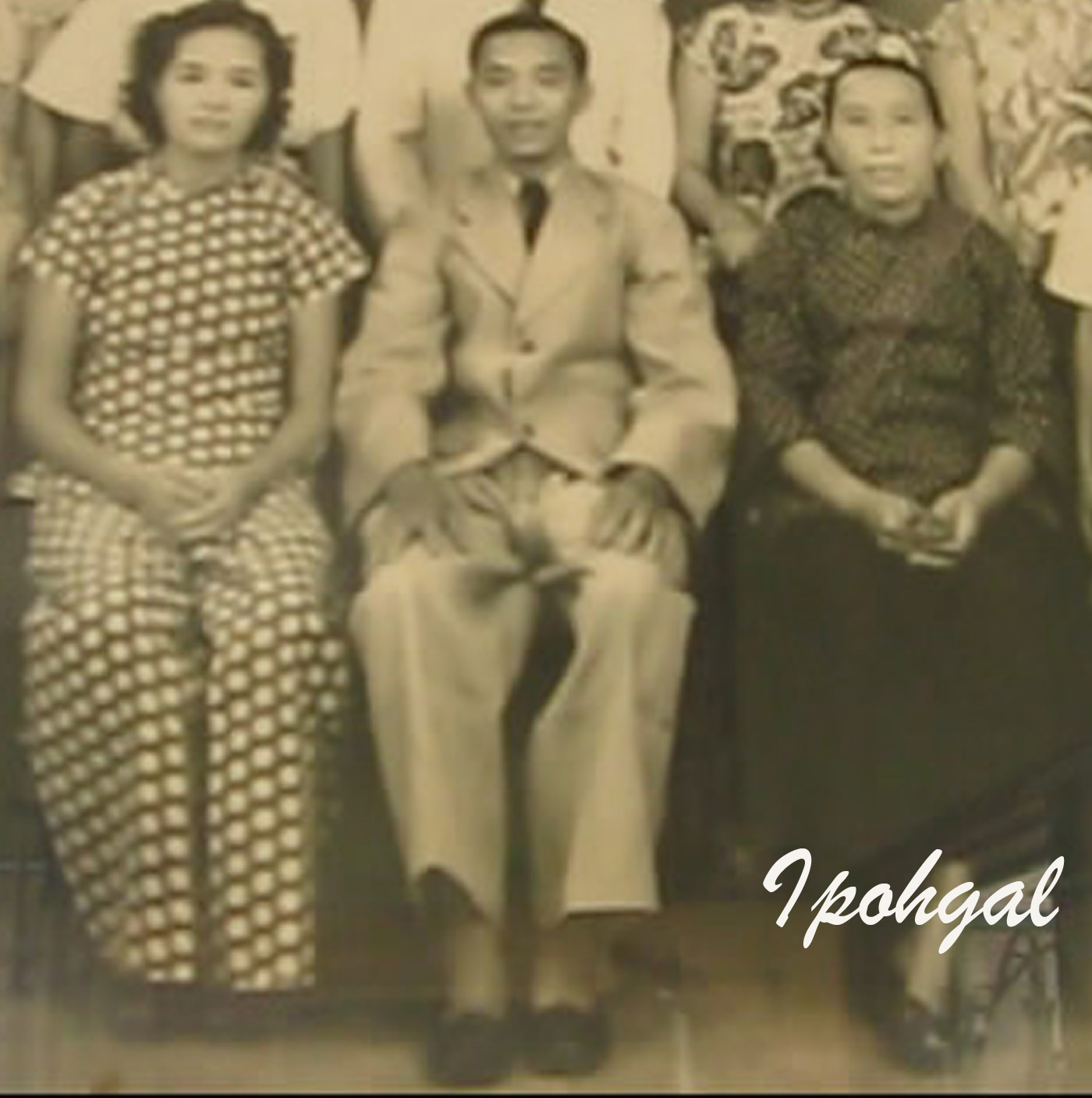
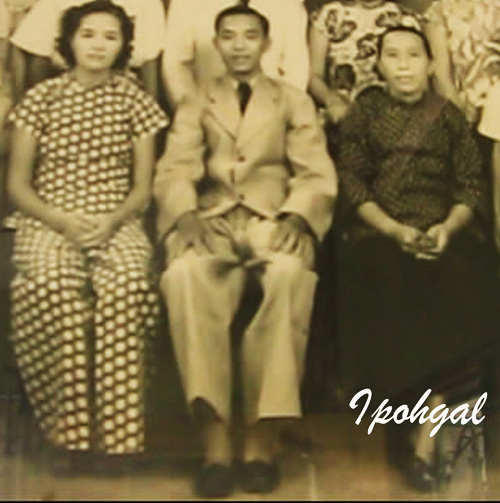
Note:  Yip Soo was seated in the middle. On the right was Yim Mun and on the left was Chan Kwan. There was no photo of Ng Mooi because she was send off to Tanjung Rambutan by grandpa shortly after arriving in Gopeng.

Related Posts with Thumbnails

46 comments to On a slow boat to Malaya but not for its tin! 飘到他乡去找新生活

  1. Katherine Wong
    July 31st, 2010 at 2:59 pm

    Hi Ipohgal a very interesting biography of your ancestor. I can attest to the early immigrant of China that came to Malaya bound to have more than one wife.
    My maternal grandfather came from Quandong Province in China too. He came to Malaya during the Manchu Period. He too had a plait and cut it off when he arrived in Malaya.
    My grandpa had two wives. In China the rich married more than one wife was the norm. It was normal for the rich and noble men to have “sam chay sei chip” (three wives and 4 concubines).
    There is a saying “if you have one key, there will be no noise, more than one, expect the clinging and clanging of the keys.”
    Since my first maternal grandma passed away before I was born, I have no idea what she is like. My mom was from the first wife, told me that she was fierce and there was no peace in the house with two women staying togather. I pity my grandfather. He was wise, he left the women to fight among themselves, and he led a very adventurous life. He was a good provider but not a good husband. Anyway in the past, it was a patriarchal society. Man is the head and woman is the slave.
    During that time in the kitchen there is no gas or electric cooker. I remember the woodcutters cut logs from the tree, stacking it up and selling it to the homes. My grand-aunts used stoves to cook. They bought block of tree stumps for fuel. Later they switched to charcoals. During that time the Chinese have extended families. We lived with our grandparents, aunts and uncles and cousins. We were one big happy family.

  2. KLboy
    July 31st, 2010 at 4:14 pm

    Ipohgal,
    Your article is always containing interesting and full of facts of life.
    Ok.Can be denied, at that era, the man was expected to be the head of the family, but the woman was treated like slave. Worst was, man had the absolute right to have a few wives, but woman STRICT stick one husband.
    What a ridiculous life style?!
    Haaaa…
    My grandpa too, had two wives in mainland China, before he headed to MALAYA.When he reached here he got one or may two more,I was too young knowing him when he passed away.
    Many got more wives with many reasons, such as the first wife can’t produce “male” children, or need more helper to help in business, and so on. This practice also has big influenced the then MALAYA Chinese family too.
    All these have occurred during the olden days,more likely we called it the “feudal society”, and this feudal system not only happened in China, it happened everywhere in the world. Real bad!
    Everything has changed now.
    Well, someone has mentioned in your last article too , the “feudal society封建社会”,and “lui yan cheong hei pun bin tin女人撑起半边天”,in other word mean men only holding the other half of the world,……”.
    Modern women have played a big part in nation building up over the whole world ! Haaaa…

  3. KLboy
    July 31st, 2010 at 4:27 pm

    Sorry, error made
    “Can’t be denied, at that era, …………………, man had the absolute right to have a few wives, but woman STRICTLY stick to one husband.”

    Well,
    This is an interesting part,shame the illegal gamblers in the public.Haaa…
    “….they were made to parade around the town with hands cuffed and placards hanging from their necks with the word “Illegal Gambler非法赌徒”…….”.
    I think this maybe still the best or effective way to shy away the offenders from doing so.

  4. ipohgal
    July 31st, 2010 at 7:08 pm

    Hi Katherine and KLboy, I think it was rather common in those days for men, especially the family patriarch, to indulge in three vices- polygamy, gambling and opium. Worse if he was rich and powerful. These three always goes hand in hand.

    For my grandpa, it was a combination of the first two. He would spent all his money on these two and ended up broke in the end towards his demise. Instead of opium, he indulged heavily on cigarettes.

    You can bet all the noises and catfights in the house among the wives vying everthing from husband’s affections to very petty things like a piece of bra! The first wife would pushed all the housework to the lesser wife and stamped her authority all over the house. The lesser wife would flirt openly with the husband to spite the first wife and you can guess the outcome. Harmony was the last thing to expect.

    This was one of the reason why my dad and his sisters eventually left the family home in Batu Gajah and went to Ipoh. They brought along their own mother to separate her from the other wife. They opened Nam Foong Coffee Shop at 188 Hugh Low Street. It was here that grandma finally found some peace. When we kids came along, she took care of us with an iron fist but it gave her something to occupy her restless mind.

    This separation did her a world of good. Towards old age, the three of them finally reconciled and got along better. This enabled us to go back to Batu Gajah for brief holidays where Grandpa welcomed us with open arms and indulged us with sumptous meals which he cooked himself.

    He gave us money to spend at the provision shop. We bought everything from prickle fruits, sweets, biscuits, ice cream to toys. Those were some of the happiest childhood days - being pampered by Grandpa who felt this was a way to please Grandma and make up to her.

    I could still remembered how Grandpa and Grandma fought over who could carry me, the youngest of their bunch of grandchildren. In the end, Grandpa won and he held me high on his shoulder and I clinged steadily to his head. He took me for a walk around the village.

    I guess it would be pretty much the same in your family too. Lots of fights in their younger days before they finally mellowed down in old age.

  5. ipohgal
    July 31st, 2010 at 7:26 pm

    And to KLboy, yes, I agreed with the British way of punishing illegal gamblers! To shame you publicly so that everybody knew of your crime and you will think again before committing it again. But it will not work on those with thick hides.

    However, my family all still have a good laugh at how my grandpa hung his head in shame for gambling until his family were left staving at home. We all agreed it was a good lesson for him. It was definately better than caning.

  6. Song
    July 31st, 2010 at 7:46 pm

    Ipohgal, your article looked ravishing! ;)

    The way you wrote just as if you drive readers through windows of the past or to tell what the past was.
    Well,…I think most of our grandparent(s) came here to search for new life, some may have settle down later and others may just merely opportunists.

  7. ipohgal
    July 31st, 2010 at 11:42 pm

    Hi Song, thanks for your compliments! I am glad to be able to take you all down memory lane.

    As for oppurtunists, could not have agreed more with you on this!

    Cheers and have an enjoyable weekend.

  8. Gordy
    August 2nd, 2010 at 2:56 am

    Well done IG, another engrossing and touching story. Thanks for letting us have an insight of how life was then. Your family history is very interesting indeed. Hope you have got it all well documented for posterity.

  9. ipohgal
    August 2nd, 2010 at 10:32 am

    Thank you very much Gordy! I am glad that you liked my family history. I think every family has its history to share and inspire. They are like unpolished gems, ready to be discovered.

    It would be nice to hear from others of why their ancestors would want to leave their motherland and come here to settle and also their struggles in the early days in a new land. I really hope they will take up their pens and write them down too.

    I have set the ball rolling, so how about you gals and guys out there?

    I truly admired my Grandpa’s reception to changes and his generosity to his cause because he wanted a better society for all. But I am dismayed at his chauvinistic and callous ways in dealing with his family, especially the womenfolk.

    He is, to me, an epitome of the patriarchal society prevalent at that time.

    And yes, I have it all well documented for posterity as you have suggested, Gordy! I am sure my children will find much delight it them too.

  10. riversidegrass
    August 2nd, 2010 at 11:51 am

    Excellent write up! Ipohgal. Writing an interesting family real story not all the time easy; it needs energy toward something eyes catching, creative and uniquely engaging “好文章一定要有好体才“. A writer should understand what a reader needs, an attractive story line with facts and timeline.
    Your story really makes you stand out and do exactly what we readers want to know. Articles that lead me to recall my childhood days and I think not simply mine alone but others too.
    “You can’t really fault her. You see, she has a pair of bound foot. Even though her foot was released” after just a few years…..”
    “古時扎腳 bound feet “ hope you don’t mind sharing more, if you have ? :)

  11. KLboy
    August 2nd, 2010 at 2:50 pm

    Ah…The Chinese “bound feet” also called the “Golden Lotus”.
    Ipohgal,
    Riversidegrass,
    interesting !!! Haaaa…..

  12. Song
    August 2nd, 2010 at 4:48 pm

    Ya,Katherine,Gordy,RSG and KLboy, agreed with you all.
    ;)
    “Bound feet” women a thing of the past, but real interesting topic indeed.I think many of you have some idea about it.Mind to tell more ?
    ;)
    “As a “siew cheh 小姐” or “rich missy”, she was used to….. ”
    In olden days, normally the truly rich and notable man was able to have “mui chai” to serve his daughter. Not like today’s world, you can simply see Indonesian maids everywhere.
    Is this implying to the progressive or laziness of human? :)

  13. ipohgal
    August 2nd, 2010 at 6:44 pm

    Hi there riversidegrass, KLboy and Song, since you guys are so interested about foot binding, I liked to share some “stories” I heard from my paternal grandma about this ancient custom.

    According to her, this custom was being practised for almost thousand of years. It was banned in the early 20th century but only officially outlawed after WW2.

    She had her feet bound around 4 years old as she was the only child of a rich and respectable man. He was the headmaster and village chief. Her father bought a personal maid to serve her and to carry her around on the back. But it was only for about 3 years because it was so extremely painful that she begged her father to stop it. Eventually her feet grew in length but her toes were broken.

    At that time, wind of changes were sweeping China and her father realised the cruelty of this custom. He “released” her amidst criticisms from elderly relatives. Eventually her feet grew in length but her toes were badly broken. She faced lifelong difficulties in walking properly again. After many years of trying, she could walk slowly but unsteadily and could not hold heavy objects. She has to spend a lot of time sitting down even when she was doing some light chores.

    I could still recalled how my Grandpa would tell her to “sit down, sit down, don’t walk around or else you will fall down and nobody is free to take care of you!” whenever grandma tried to walk around the house.

    This custom was said to come about when rich girls tried to emulate a royal concubine with small feet. It was a symbol of wealth because feet bound women do not perform any housework. Their parents and husbands took great pride in tiny feet as they were rich enough to support their daughters or wives. Unlike girls from poor families who has natural size feet, they do not have to toil in the field.

    Moreover, men at that time were said to find such tiny feet very erotic and sexually appealing. Such women normally wear a pair of silk slippers meant for such tiny feet. And they make graceful, slow and swaying movement whenever they walk. Their tiny feet were called “The Three Inch Golden Lotus.”

    Grandma told me that before the binding starts, her feet were soaked in herbal concoction and massaged to make them soft. Her toes were then pressed down to make them curled under. Her foot arch was also pressed down very hard before yards and yards of cotton binding cloth were used to bind them very very tightly. It was very painful and she cried and cried. It was done by a proffesional foot binder who would ignored her pleas to stop.

    Everyday, this lady would come to the house to unbind her feet, wash away the infections and trim the nails before binding them up again with fresh cotton cloth. Each time it was tighter than the previous.

    I can still remembered playing her tiny feet when I was a young girl, out of curiosity. She was lying down on the bed taking a nap. Silly as it sounds, I secretly took a smell of her feet and it was like “yuck!” They smelled rotten. My siblings and cousins also took turns to “play” her tiny feet too. We could not understand at that time how an adult could have such small feet.

  14. Wow
    August 2nd, 2010 at 8:25 pm

    Hello Ipohgal, I enjoyed reading this story. It was so interesting. As a student, I liked such stories which I could not find in my school History text books, which were so boring!

    Keep writing them and I must say WELL DONE too!!!

  15. riversidegrass
    August 2nd, 2010 at 8:29 pm

    When talk about “Bound feet“,some history related to it, there were three type of freaking things in the ancient China: Prostitutions, Eunuchs, and Bound Feet. The first two were also commonly happened to other countries too, but the “bound feet “was the uniquely happened in the then China only.
    That’s why,firstly, women bound feet and secondly, men’s plait.These two things caused the olden Chinese being critics and called “Sick Man of East Asia东亚病夫” by the outside world in the past. :(

    “………But it was only for about 3 years because it was so extremely painful that she begged her father to stop it…….”
    There is a saying of it “小脚一双,眼泪一缸” means” in order to have a pair of so called small charming feet, you need to suffer and cry a lot.”
    Ipohgal, women bound feet really suffer severely,errr…maybe most of us can hardly feel the real pain of it.

  16. ipohgal
    August 3rd, 2010 at 10:35 am

    Dear Wow, I agreed with you that our school’s history text books are rather boring and stiff. We were taught that ALL the early Chinese immigrants came to Perak solely for TIN and nothing else. Now you know it was more than that.

    In this story, my grandpa was doing very well in his village. He came for political reasons, not for the tin and hence the title for this article. But I think he must be in the minority group.

    And as for riversidegrass,” 小脚一双,眼泪一缸” means “in order to have a pair of so called small charming feet, you need to suffer and cry a lot.” you got a point here.

    My grandma was teary when she narrated her painful experience of having her feet bound. Guess she could not be able to forget the deep pain as a little girl.

    It was a good thing that cruel and illogical customs that you have mentioned above i.e. foot binding, castration and keeping long braids were finally outlawed. These immigrants brought with them many customs, beliefs and traditions to Malaya but not the “bad” ones.

  17. KLboy
    August 3rd, 2010 at 11:38 am

    Hi Ipohgal,
    I can’t imagine how tough or suffer was in those days, our grandparents can travelled so far from Far East with just a steamer and not in one day journey, but at least months.
    They were able to endure those hardships during their journey and finally reached here, the then MALAYA.
    At last they settled down here , all scatter around to places throughout southbound Malacca and Johore and the furthest south Singapore, central such as Kuala Lumpur and Selangor, northbound like Penang island and Perak especially Ipoh. Some even travelled further to east land, like Sabah, Sarawak and so on.
    They were travelling here not just for their own good mean to escape “turbulent period in their former homeland” but also because they wanted to search for a better place for their coming generations to have a better life. They not just came here to have enjoyment or vacation, but instead they worked very hard for a living and have make “tons “of contributions to the nation building.
    Anyhow, I truly salute those who have contributed to our nation building in the past, from unknown to well-known persons.

  18. KLboy
    August 3rd, 2010 at 11:44 am

    “…..It was a rented house, not his own. In a fit of anger, he took her to Tanjung Rambutan and…..”

    Hi !
    Ipohworld,
    Wooow..! I don’t know that Tanjung Rambutan have been existed so long ago, any idea or any further detail of this?

  19. Song
    August 3rd, 2010 at 12:33 pm

    “The Kinta Tin Rush attracted not only mining towkays and coolies but all sorts of people, including adventurers, mer­­chants, crooks and prostitutes,” said Dr Ho in an interview.
    Ipoh revealed
    By FOONG THIM LENG in The Star
    on Tuesday November 17, 2009
    http://thestar.com.my/lifestyle/story.asp?file=/2009/11/17/lifebookshelf/5093540&sec=lifebookshelf

    Yes,”TIN” gave the people in the Kinta Valley an identity either directly or indirectly.

    Ipohgal,
    like your grandpa
    “No, Yip Soo did not intend to work as a mine coolie. He only wanted to sell his bean curds to them. He knew there was a ready market for his products…..” ;)

  20. ika
    August 3rd, 2010 at 1:22 pm

    KL Boy Regarding Tanjung Rambutan, a quick summary:

    The initial name of the hospital, opened in 1911, was ‘The Federal Lunatic Asylum’. In 1928 due to changing ideas in the psychiatric profession it was renamed ‘The Central Mental Hospital’. In the early 1970s, it was renamed again as ‘Hospital Bahagia Ulu Kinta’.

    The site for the Lunatic Asylum was selected by Dr W F Samuels, who became the Institution’s first medical inspector when it first opened. The three male wards and one female ward were separated by a kitchen building.

    Today the hospital occupies 544 acres of land near the now defunct Tanjong (Tanjung) Rambutan Railway Station.

  21. KLboy
    August 3rd, 2010 at 3:31 pm

    Hi Ika,
    Thanks for the valuables historical info, hopefully someone can add on more info if available.

    Ipohgal
    “……he was unsympathetic to her ordeal and instead gave her the cold treatment. Before long, she began to fall into a deep depression and shut herself in a room all day….”

    “…….., especially the family patriarch, to indulge in three vices- polygamy, gambling and opium. Worse if he was rich and powerful….”

    Katherine Wong July 31st, 2010 at 2:59 pm
    “It was normal for the rich and noble men to have “sam chay sei chip” (three wives and 4 concubines).”

    What a damn cruel world!!!!
    I personally pity her and strongly against any old and bad customs.

  22. ipohgal
    August 3rd, 2010 at 7:00 pm

    Hi Song, thanks for the interesting link!

    “The Kinta Tin Rush attracted not only mining towkays and coolies but all sorts of people, including adventurers, mer­­chants, crooks and prostitutes,” said Dr Ho in an interview.

    I think Yip Soo belonged to the merchant category of immigrants. Towkays, coolies, adventurers, merchants, crooks or prostitutes, their aims were the same - for a better life. These pioneers laid the foundations for what Perak was today.

  23. ipohgal
    August 3rd, 2010 at 7:19 pm

    Hi KLboy and Ika, here are some additional infos on Tanjung Rambutan Mental Hospital.

    It was the oldest mental hospital in Malaysia. Due to the location of this mental hospital, Tanjung Rambutan became synonymous with mentally ill people. The other one being Tampoi in Johore. People liked to say, “Send so and so to Tanjung Rambutan” means that person must be mad and need to be sent to the mental hospital. I think Tampoi has a lot to catch up because you seldom hear people say, “Send so and so to Tampoi.”

    This hospital occupies some 500 acres of land and was like a little town by itself. The latest statistic shows that there were around 54 wards for the male and 25 wards for the females patients. There were about 2600 beds all in. The place was build amidst a scenic surrounding. The wards were clean and well kept, making them conducive for the patients to recover from mental stress.

    Beside housing mental patients and offering psychiatric treatments to them, this hospital also offers outpatient services such as counselling and phychological testing to patients with milder symptoms.

  24. ipohgal
    August 3rd, 2010 at 7:39 pm

    Hi KLboy again, refer to:

    “……he was unsympathetic to her ordeal and instead gave her the cold treatment. Before long, she began to fall into a deep depression and shut herself in a room all day….”

    What a damn cruel world!!!!
    I personally pity her and strongly against any old and bad customs.

    I think both Chan Tai (my maternal grandma)and Ng Mooi (paternal grandpa’s second wife) were very unfortunate women. Both of them were victims of male chauvinism. One was “punished” for not delivering a son and the other for being unable to defend herself from sexual assaults.

    We suspected, many decades later, that Ng Mooi had died in the mental hospital and the letter in English which my grandma could not read was to inform the family of her demise and request us to claim her body which grandpa did not. We don’t know what happened to her body.

    To compensate her for all the injustice, my family still commemorate her on Qing Ming and Hungry Ghost Festival annually because we considered her a part of the family’s ancestors. I do hope her tormented soul rest in peace.

  25. KLboy
    August 3rd, 2010 at 8:14 pm

    Ipohgal, thanks for the additional info about “T. R.”.

    Well,maybe Felicia have some say too.

    “……my family still commemorate her on Qing Ming and Hungry Ghost Festival annually because we considered her a part of the family’s ancestors….”
    I have same feeling as you,Ipohgal,and hopefully your grandma Ng Mooi’s soul can rest in peace foever and ever.

    “Grandpa soon earned the nickname “Tofu Soo 豆腐苏” among the miners……”
    He was really a good merchant indeed, he knew the wind of change, and he also grabbed the right opportunity at the right time. Can we say the Fittest Survive? Like what Charles Darwin. Has mentioned “Survival of the fittest”

  26. felicia
    August 4th, 2010 at 8:51 am

    KLboy….maybe the theory of ’survival of the fittest’ is somewhat true. not everyone who left their homeland and came to Malaya to seek a fortune were lucky.

  27. kinkonkid
    August 4th, 2010 at 9:26 am

    how emgrossing your - grandfather story - IG. It gave a soul and color to the many faceless migrants who came and settled in the Kinta Valley in the early 20th century.

    yours is a sequel to IPOH - when tin was king - ablbeit - the story of the many you/s and the me/s who hail from the kampongs and villages.

  28. ipohgal
    August 4th, 2010 at 10:35 am

    Hi KLboy and Felicia, I think there was some truth to the theory of ’survival of the fittest’ among the earlier settlers in Malaya.

    Not everyone was so lucky to strike ‘tin’ and became wealthy towkays. For one towkay, I believed, there were thousands of coolies who earned their keep with much blood, sweat and tears.

    For those who did not have much luck on their side, I think they made it up with their brains and their physical strength.

  29. ipohgal
    August 4th, 2010 at 11:24 am

    Hi kinkonkid, thank you very much for your encouraging words.

    As a young girl growing up in the new town in Ipoh in the late 60s, 70s and 80s, I always used to listen to stories told by my paternal grandma. She would narrated why she and paternal grandpa left their village in Guangdong and settled in Perak. And their lives in the earlier days.

    After her death, it was my father’s turn to tell me about his experience of living under the Japanese Occupation and how he nearly ended up in Burma. He also told me why he opened Nam Foong Coffee Shop and later ended up as a scissors cutler when times were bad. Please refer to my earlier blogs if you are interested to find out.

    My mom also told me about stories from her side. Of why I did not get to see her mom who died from childbirth and why her father ended up blind.

    I could not say my stories were sequel to the book ‘Ipoh-when tin was king’ because Dr Ho wrote a book and I only managed to write a few articles!

    But I agreed with you that my stories gave a ‘face’ to the ‘faceless’ and a ‘voice’ to the ‘voiceless’, otherwise a humble bean curd maker like Yip Soo will remained unknown. So too tragic women like Chan Tai and Ng Mooi.

    I firmly believed lesser folks like us also deserve to have our stories heard because our ancestors also contributed to this country. I hope more ‘ordinary people’ will share their stories at Ipohworld.

    Note: I have visited your blog and left a comment at ‘The Shanghai That Was’ dated May 17 2010. Are you an acquaintance of James Wong Wing On? He was my cousin brother, the son of my father’s youngest sister (from the same mother, Yim Mun). Like me, he also grew up in a coffee shop but at Clare Street around the same time but he was several years my senior.

  30. riversidegrass
    August 4th, 2010 at 11:43 am

    kinkonkid
    August 4th, 2010 at 9:26 am
    “…..It gave a soul and color to the many faceless migrants who came and settled in the Kinta Valley…..”

    True,Ipohgal.
    Your story has revived their fame and glory of the past.
    :)

    “MANY UNKNOWN VOICES & FORGOTTEN FACES WHEN TIN RUSH.”
    The Tin Rush of the then MALAYA; just like the gold rush of California, in western world, brought in an influx of immigrants belonging to many faces and cultures from the neighboring Asian countries making MALAYA, especially Ipoh a melting pot of cultures and traditions.
    Many who came down as laborers or opportunists, later turned settlers and made fortunes, built a great quantity town houses and made Ipoh home. All those houses that the early settlers built lie mostly in the Ipoh old town area.
    IPOH,she is still considered as the attractive city in Malaysia to spend a ”retired life” in peace due to its “charming”, “classic” , “characteristics” and “feel” that an old world charm which is unmatched by any other part of the world.

    Ipohgal
    Keep it up and to a book.

  31. riversidegrass
    August 4th, 2010 at 12:45 pm

    “锡广热时被遗忘的一群”
    “MANY UNKNOWN VOICES & FORGOTTEN FACES WHEN TIN RUSH.”

    Dedicate to the group of unknown & forgotten faces when Tin Rush:
    一切靠自己,不求人。艰苦奋斗,就是在艰苦的环境下全力拼搏,没有条件就千方百计地去创造条件。没有这种奋斗精神,我们都将一事无成,有了这种奋斗精神,我们就无往而不胜。没有经过这一番苦难,凤凰蝶就不能展开它那美丽的翅膀。

  32. riversidegrass
    August 4th, 2010 at 4:10 pm

    Dedicated to the group of Unknown voices & Forgotten faces during “Tin Rush” in the then MALAYA:

    Everything depends on ourself without hoping for any help. “Hard working” is the only way to overcome all obstacles, and create something miracles out of nothing are the golden rule of surviving. Without the persistency, there isn’t any success in life. With the determination toward life, success is definitely in our hands. Without getting through all the stages, just like a larva(pupa)is not able to transform it into a Monarch(butterfly)and spread its pretty and colorful wings with pride.

    一切靠自己,不求人。艰苦奋斗,就是在艰苦的环境下全力拼搏,没有条件就千方百计地去创造条件。没有这种奋斗精神,我们都将一事无成,有了这种奋斗精神,我们就无往而不胜。没有经过这一番苦难,凤凰蝶就不能展开它那美丽的翅膀。

  33. ipohgal
    August 4th, 2010 at 5:38 pm

    Hi riversidegrass, thank you so much for the English translation of your beautiful tribute to all the ‘faceless’ and ‘voiceless’ earlier migrants to the then Malaya in search of a better life!

    The key word was hardwork. I am sure most of them carried this determination in their hearts when they boarded the boat to take them here.

    And to kinkonkid, I hope you don’t mind me borrowing an equally beautiful phase that I saw in your latest post:

    自力更生 艰苦奋斗 zhili geng sheng, jianku fendou, which roughly translated as “to struggle against odds and adversity, and a renewal of one-self in times of trail and strive. For it celebrates - industriousness, honesty, scholarship, amongst others.”

  34. riversidegrass
    August 4th, 2010 at 6:09 pm

    Well say, Ipohgal. You have good understanding in Chinese proverb too.
    ;)

    “自力更生 艰苦奋斗” has similar meaning to “一切靠自己,不求人。艰苦奋斗,就是在艰苦的环境下全力拼搏,没有条件就千方百计地去创造条件。Everything depends on ourself without hoping for any help.Hard working” is the only way to overcome all obstacles, and create something miracles out of nothing are the golden rule of surviving.”

  35. Song
    August 4th, 2010 at 6:39 pm

    Hi kinkonkid, ipohgal & RSG.
    There are no better proverb as all of you have mentioned to describe their “Hard working”,”Determinations” & “Persistency” in building a better life.

    “Grandpa soon earned the nickname “Tofu Soo 豆腐苏” among the miners…..”
    He not just got his nickname by sitting and did nothing. ;)

    “Can we say the Fittest Survive? Like what Charles Darwin. Has mentioned “Survival of the fittest”
    This theory still apply in today’s world.

    We truely proud of our ancestors’ efforts in building up a better nation for us and the coming generations. :)

  36. KLboy
    August 4th, 2010 at 7:33 pm

    Hi there ! You can count on me.Haaaa.
    “自力更生 艰苦奋斗” “to struggle against odds and adversity, and…”
    , “Survival of the fittest”.
    I agreed, proven from the history of Ipoh.

    An interesting topic here , most of them were our nation builder of the past.
    “……..Many spend years to redeem their freedom. This wave of illegal human trafficking was called “Mai Chu Chai卖猪仔 (人口贩卖).””

    Ipohworld has any idea ?
    Anyone ?

    Have a good evening.

  37. ipohgal
    August 5th, 2010 at 12:23 pm

    You are right, Song, to say that my grandpa did not earned the nickname “Tofu Soo” by merely sitting around and doing nothing. He, liked the rest, knew that money and food did not drop from the sky. You have to slog to get them.

    As late as the early 70s, when grandma took us kids to Batu Gajah for school holidays, I got to witness first hand how the family make tofu in the traditional way, without the help of machines. It was hard work to say the least.

    Grandpa delegated each of his children to a specific job. Work started at around 12 midnight when other household were asleep. Some of them will do the grinding work. Others will do the chopping of fire woods and cooking. After that, they will used the cooked soya milk to come out with different products such as white tofu, fried tofu, tau pok, tau foo fah and tofu skin. There are many steps involved and when all were done, it was dawn already. The fresh products were then distributed to various markets in Lahat, Pusing, Pengkalan and Papan. Grandpa will sell the remaining products in the Batu Gajah market before calling it a day in the late afternoon. Next, he will have a few rounds of mahjong to complete his day.

    So, eventhough my grandpa was not a rich man, I am extremely proud of him. He earned his money in the hard way and did not cheat anyone. He took great pride in his honest work.

    As always, he was a generous man. In his later life, he made generous donations to his clan association, The Perak Nam Hoi Association and sat on its board of committee. I could still remembered he often took me along to its functions like the annual tea party and presentations of scholarships to children of clan members who had done well in their studies.

  38. ipohgal
    August 5th, 2010 at 2:58 pm

    Hi KLboy, as you have already knew, at the end of the 19th and the start of the 20th century, the lucrative tin mining industry brought a big flux of coolies to the tin mines in various parts of Perak. They came mainly from the provinces of Guangdong and Fujian.

    These coolies are divided into two categories. The first were those who paid their journey with money from their own savings or borrow from their relatives. They are the free coolies.

    The next group were those on a credit ticket system, advanced by their prospective employers in Malaya. This group were the most exploited by their employers. They were required to work very long hours to pay off high interest rates on their credit ticket. They were caught in a cycle of poverty and indebtness.

    These are the ones called “Chu Chai” or roughly translated as ‘piglets’. “Mai” means ’selling’. They ’sold’ themselves almost like slaves to gain a ticket to go to Malaya for a better life only to find it was not a pot of gold at the end of the tunnel. And they were pitifully bound to their contract to pay up their passage fare.

    The same system was applied for those slaves or ‘piglets’ in the Gold Rush in California.

  39. KLboy
    August 5th, 2010 at 3:01 pm

    Hi riversidegrass,ipohgal and Ipohworld
    “…brought in an influx of immigrants belonging to many faces and cultures ….., especially Ipoh a melting pot of cultures and traditions.Many who came down as laborers or opportunists,…”
    Do you agree or think so this wave also related to “…Many spend years to redeem their freedom.This wave of illegal human trafficking was called “Mai Chu Chai卖猪仔 (人口贩卖).”” ?
    If yes, any story on this ?

  40. KLboy
    August 5th, 2010 at 4:13 pm

    “….19th and the start of the 20th century, the lucrative tin mining industry brought a big flux of coolies to the tin mines in various parts of Perak. They came mainly from the provinces of Guangdong and Fujian…..”
    Ipohgal,thanks for the info.
    Ok.I’ve just got some extra info and want to share with you all. If not mistaken, there were roughly 3 waves of Chinese migration movements to Southeast Asia, especially to Malaya. In the 15 th century to Malacca. The first wave descendant (Hang li po) is called babas/nyonyas, they speak a smattering of hokkien words mixed with mostly Malay words. Then 19 th, early 20th century from South China provinces i.e. Fujian, Guangdong, Hainan to Straits Settlements/Malaya, they speak Hokkien, Hakka, Cantonese and all mixed with a smattering of Malay words. Most recent is the Chinese from both North and South china in the 1990s, 21st century mainly to Singapore (insignificant numbers to Malaysia due to cross border marriages), they speak fluent mandarin (as well as their local dialect if any). Need not to say “CHINA DOLL” not excluded in the third wave. Haaaaaa…

  41. kinkonkid
    August 5th, 2010 at 5:38 pm

    hi IG - I am not an acquaintant of James Wong but a follower of his blog. Ipohites are made of stern stuff - as they said - 有骨气.

  42. ipohgal
    August 6th, 2010 at 11:03 am

    Hi KLboy, I have forgotten to mention that in the credit system given by the prospective employers to the immigrants, it does not covered only the sea fare but also a month’s salary in advance too. It was actually like a loan in advance but the interest rates were very high. In other words, such employers acted like “loan shark” in those days.

    In a “mai chu chai” system, the phase “kow chut sup sam kuai” was common. It means, for every nine dollars lent out to the immigrants, the employers will get thirteen dollars in return, inclusive of interests on interests. This formula was also used by money lenders and pawn shops during that time.

    That explained why these poor people who often came with a hope of a better life in Malaya ended up in debts to their employers and they took many years to settle their debts.

    This was told to me by my grandma. She was very grateful that coming from a rich family, she and grandpa and their brothers could afford to pay for their fare and thus was saved from being sold like ‘piglets’ or ‘chu chai’.

  43. KLboy
    August 6th, 2010 at 1:31 pm

    Bravo! IPOHWORLD, you are really wonderful!
    Ika, Ipohgal , Felicia and admin, thanks a lot for the valuable history information. All these info are rarely, hardly or none you can find in our school history book nowadays. Well, frankly speaking, I like this website due to your UNSELFISHNESS and BIG-HEARTEDNESS in sharing and providing extra facts of the yesteryears. It’s really benefits and enriched me and the rest of the readers, especially the younger generations. Well, hope this doesn’t offend anyone, IPOHWORLD, I can’t find any info on early immigrant in your database, http://www.ipohworld.org/dbr.asp;or maybe I did not use the right key-word to search for it. If there is any do update us, otherwise do add it on to the site; because I have a few friends of mine also keen to know it and also fans of your site too and who knows, maybe more readers too. Cheers! Keep it up, guys!

  44. KLboy
    August 6th, 2010 at 1:42 pm

    Sorry, error made.
    http://www.ipohworld.org/dbr.asp
    Cheers !

  45. KLboy
    August 6th, 2010 at 2:56 pm

    Hey, guys! The reason why I and my other friends are interested in such a blog,like IPOHWORLD is because our birthplace KUALA LUMPUR and IPOH shared the nearly same historical background; both were built on “TIN”. Agreed? Haaaa…..
    Keep up your good work.Have a nice day!

  46. Song
    August 6th, 2010 at 7:07 pm

    “…But I agreed with you that my stories gave a ‘face’ to the ‘faceless’ and a ‘voice’ to the ‘voiceless’, otherwise a humble….”
    “…..Work started at around 12 midnight when other household were asleep. Some of them will do the grinding work. Others….”
    “……he made generous donations to his clan association, The Perak Nam Hoi Association and sat on its board of committee……”

    Well, need not all great men are great; only those with principal and conscience then considered great men.” Hardworking”,” Determinations” and “Persistency” is still a passage to glory in life.

    Someone has mentioned.Your article really gave a ‘face’ to the ‘faceless’ and a ‘voice’ to the ‘voiceless’.
    Don’t give up, continue surface all the untold stories of the past, I am sure those truly bloggers will give you full support. ;)

    Real sad,actually,we do have many historians around,historians are concerned with the continuous, methodical narrative and research of past events as relating to the human race; as well as the study of all events in time. Due to somewhat and somehow, the histories can’t be put up to the book.sigh! :(

Leave a Reply

You can use these HTML tags

<a href="" title=""> <abbr title=""> <acronym title=""> <b> <blockquote cite=""> <cite> <code> <del datetime=""> <em> <i> <q cite=""> <strike> <strong>

Spam protection by WP Captcha-Free